Category: Embroidering


Purchasing and using Taoknitter Arts Designs

FYI: All digitized design file sales are for single use on solo dresses to be sold, or unlimited use for personal purposes not involving re-sale. If designs are for team dresses, multiple OTR solo dresses, or other retail items, the unlimited use license is 3 times the file price.  Files cannot be re-sold; violators will be prosecuted. 

It is important that all clients, from the beginning embroiderer to the professional, are happy.  We are here to fix files, trouble-shoot stitch-outs, answer questions, etc.   All questions, problems, & comments can be sent to taoknitter@gmail.com. Please be aware that because of the digital nature of purchases made from me, there are no refunds.  However, I will do everything in my power to make sure your files work beautifully.

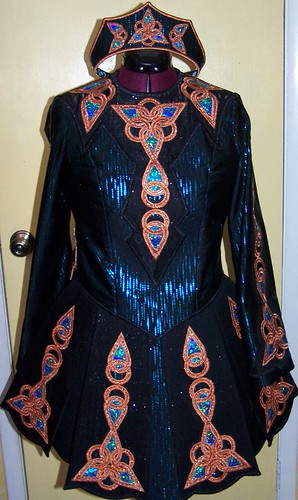
All of the Taoknitter Arts Irish Dance Dress Embroidery Designs are digitized and ready for you to use on your own embroidery machine.  All embroidery formats are supported.  Embroidery services are also available for those without embroidery capabilities or if your hoops are too small for a specific design.  All designs can be split, revised and/or re-sized for you needs.

You can see all of the currently available designs on Flickr (http://www.flickr.com/photos/taoknitter/).  There are some newer ones that are still in the process of being digitized, but if you want something that I have not finished yet, I will finish it for you.  The full design sets (with all of the individual pieces) are only visible to Flickr contacts that have been designated “friends,” so if you would like to see everything, create a Flickr account for yourself and then add me as a contact and friend.  I will designate you as a friend when I am either notified by Flickr or you.

Facebook

Re-sizing, Revising, Splitting 

These charges are in addition to the initial cost of the designs.

  1. Simple re-sizing: Free
  2. Design revision: $5-$50 (depends on complexity of revisions)
  3. Splitting: $7-10 per split file (depends on complexity of the splitting).

Custom Designs & Custom Digitizing

If you just do not see what you want in the Taoknitter Arts collection, we can start from scratch! We are available to discuss your dress ideas, to work with your concepts or create one for you, to answer questions about achieving great looking embroidery, to troubleshoot stitch-outs if necessary, etc. We can also do your embroidery for you.  As accomplished dressmakers and embroiderers, we are here to support the Irish Dance Dressmaker/Embroiderer whether you are a newbie or an experienced professional. Please contact Ann at taoknitter@gmail.com to get started.

Also, if you want to design your own unique dress, we can help you do that! Custom, one-off designs that you provide me can be digitized from jpeg, bmp, png, vector graphics, etc.  I do not use the auto digitize feature as it always fails to produce a neat product, especially when dealing with the complicated overs and unders of Celtic knots.  Digitizing prices range from $3/1000 stitches (if digitizing from clear, symmetrical, and proportioned graphics) to $4.50/1000 stitches (if working from hand drawn design “ideas” that require more attention).

Let me explain the pricing range: while hand-drawn designs can be clearly presented, there is usually added time to interpret and work through the whole design to ensure that correct line widths are being used consistently and that the correct symmetry applies where needed.   The only way to cut that down and reduce cost is to send me clear vector graphics with the lines already drawn to the correct widths and all elements presented symmetrically; however unless you can do that yourself, that will cost you as much or more than the stitch digitizing!  I do have several clients who send designs to me that way which means I can quickly give a more accurate estimate (which is again something hard to do with hand drawn designs), and eliminates the additional cost, but I also know they do that work themselves. I do not require vector graphics as I am experienced working with hand drawn designs, but it does cost more in terms of time and labor.

The total cost of digitizing your own design can range anywhere from $25 to $1000 depending upon the complexity of the work and the final stitch count. The final design and embroidery files belong to you after payment is made, and will not be re-used or sold by Taoknitter Arts. Please email taoknitter@gmail.com to start the process.

Embroidery

Any design can be stitched onto fabric you have interfaced, stabilized, and marked accordingly (see directions here: https://taoknitterarts.com/2011/04/21/pursuing-the-perfect-embroidery-stitch-out/)

If your dress is done, appliques are your best option (for more information, please click here: Custom Appliques), but if it is not, embroidering directly onto your pieces is more economical.  The cost for this can range from $75-700 depending on the design and total number of stitches.There is of course the cost of the designs to add to that.  Keep in mind that even if you want an element stitched onto the skirt 20 times, you only pay for that design once.

Embroidery costs are:

  1. $1.00/1000 stitches using rayon or polyester thread plus the cost of thread
  2. $1.50/1000 stitches using metallics (no super-twist) plus the cost of thread
  3. $2.00 per 1000 stitches for applique designs plus the cost of thread

These prices include extra stabilizers used with the hoops. If I cannot do your embroidery for you, I have contacts, but they have their own pricing.  Please email taoknitter@gmail.com for more information.


Still to come: how to prep your fabric to send to me for embroidery…for now, here is a bit of info:

 https://taoknitterarts.com/2008/10/22/interfacing-and-stabilizing-fabric-for-embroidery/  The password is taoknitter. As for the design, once I get your fabric and see the area to be embroidered, I will make it fit.  Just make sure to trace your pattern piece onto the prepped fabric.If you send me swatches of the colors you want for thread, I can match it.  If you do not have swatches, if you go to to fabric store and choose colors from the Sulky embroidery thread, I can convert to the thread I use.

A client sent me fabric to embroider.  Velvet.  I have not met a velvet I cannot embroider…until now.  I have worked with a huge array of different stretch velvets, microfiber velvets, cotton velvets, very plush velvets, silk velvets (my least favorite for embroidering, let alone sewing no matter how beautiful it is), and the longest haired velvet I have EVER encountered!  But this was the most difficult, so there was much snarfing here the past few days as I tried to figure this out.

They interfaced, stabilized, and marked the fabric perfectly!  Perfectly.  Sent me a perfectly finished piece for the testing I always do before I set upon the actual dress pieces.

The first test sucked.  Look at this puckering!  Erg!!

erg by you.

The second test was still bad even though I steamed the hell out of it at the risk of leaving marks and even tried to pull it apart which did not happen without some effort:

DSCN0784 by you.

So frustrating,  I try to keep costs down, but this was looking like I was going to have to purchase a variety of stuff to try to solve this problem.

I went back and forth about asking my fellow dressmakers for help because I was sure I was just going to have to bite the bullet and re-do the whole thing, but I posted my dilemma to my Taoknitter forum just in case.  Well, Katherine reminded me I might need to change the needle (which I did) and suggested I might want to try an adhesive spray even though I avoid the stuff like the plague because it sets off exploding migraines.  I was ready to buy the stuff.  Then maid2feis chimed in (she never posts her real name, so I won’t post it here either) to suggest that I use a fusible webbing to get the interfacing to stick…………………there is a reason I love those women on the forum!!!  It worked!!!!

DSCN0785 by you.

Thank goodness!  And thank you maid2feis!!!!!!!!!!

Now, I am still not sure why this velvet was so difficult.  It did not look or feel any differently than any other stretch velvet I have encountered.  The fusible cotton interfacing looked the same.  But none of it adhered the way I am used to.  After really fusing, steaming the test piece, all of the glue was gone from the interfacing, but it did not stay stuck to the velvet.  The velvet really did not seem to be any different than any I have used, but it was like teflon in terms of the adherence of the interfacing…it must be the velvet, yes?  Are they including teflon in the mix these days as a stain resistor?  Is there a new polyester out there that resists fusing?

Well, Mistyfuse came to the rescue.  Interestingly, I could still pull the velvet off the now Mistyfused interfacing, but it was much more difficult, and it stood up to the embroidery.  Weird

Isn’t it time for velvet to bow out of Irish dance dresses?  I’m ready.

Ok,  pic of the first test:

(One of these days I will really learn to use one of my photo software packages so I can make pics like this the best they can be, but no time now.  So sorry that they are not perfect.  And yes, there are pieces of thread that I did not trim…it’s a test!!))

The youngest diva and I stood there and watched a lot of this stitch out.  You would think it was all magic the way we become so fascinated.  I would be lying if I said my attention to it is purely professional as I am just as excited watching the stitches take shape as my 8 yr-old is, but I do also learn a lot about the designs and things I need to fix by watching the machine do its thing.

If you look closely at the above pic, you can see some rippling, some shadows, and off-kilter lines.  Why?  Because I got lazy, and I still needed to adjust some stitch densities.  My laziness means I did not prep the fabric the way I would the actual dress pieces, so the fabric could not stand up to the stitches which caused a lot of rippling and nap diving (burrowing into the velvet) even though I still used a topper.  My bad…however, I think that may also have helped to make it very clear where I still needed to adjust stitch densities and satin stitch widths.

A bit closer here:

  This one gives a sense of how small this all is as you can see some microscopic dust (a decorating choice in this house), and the weave of the velvet!  You can also see how off center things got because I did not stabilize well enough.  You’d think I was a rookie…

So, I spent a few hours re-working the designs, checking and adjusting every line and shape…I dreamed all night long that the blue feathers on the eagle kept growing and changing and re-swirling different directions.  Do you think my embroidery dreams are evidence of psychosis??

My embroidery hubris made me take my next test a bit more seriously.  I interfaced the velvet first with a woven fusible then fused Decorbond to that.  After I hooped my sticky back, I then used a heavy duty tear away behind that…I contemplated using 2 layers of the tear away, but worried that might have been an overkill that would cause skipped stitches.

This test was much better all the way around.

There are still some shadows from the nap of the velvet, but no rippling or nap diving.  All of the braid lines stayed lined up though I still went back into the design files to make the satin stitch even just a bit wider to try to fill in the remaining gaps between the satin stitch columns and the back stitch outlines.

Here is the eagle that haunted my dreams:

The winged lion:

The gryphons and a braid:

The nessies:

Bodice front with the birds, serpent braid, and red braids…you can see clearly here that the satin stitch inside the braids needs to be wider…that just bugs me!

And lastly the vertical braids which also got a bit more tweaking after this:

I sent the test piece off to Colleen who will see the family that wants the reproduction at a feis this weekend…is it CNY?  Colleen called me when she got it this afternoon, and she was as excited as I am about this little thing!  So nice to hear her voice.  One of these days I hope I get to meet some of my fellow dressmakers in person…such great people!

ETA:  More curve on the learning curve!  We decided to use a gold metallic in place of the tan thread in the designs.  It was a particular kind of metallic from Madeira meant to be strong.  Yeah…so freaking strong that my machine would not cut it so this is what the stitch out looked like!

3 by you.

Yuck, boo, hiss!!!  No time to find a similar color in a different thread, so I went back in to re-do the embroidery sequence.  Thank goodness I consider this kind of challenge to be FUN!!

I wrote about the beginning of this journey here:  Newest Endeavor

I routinely field questions from dressmakers with home embroidery machines about whether or not they can do large bodice designs that require one or more re-hoopings.  The answer is always, “Of course you can!!”  

I have yet to find a design I can’t re-hoop, but I am honest with dressmakers about the complexity of re-hooping some designs.   In most cases, the dressmakers are game, so along with the split files I send detailed instructions written for their files complete with pictures.  Sometimes, when the design is big enough to need 4 re-hoopings or the design requires extreme precision to line up contiguous lines, then the dressmaker may send the fabric to me so I can do it in a big hoop on my commercial machine, but there have been brave, adventurous souls who still want to do it themselves…my kind of dressmakers!!

Do you need big hoops?  I have always assumed so since I have always had the mega-hoop for my Bernina and learned to use the Hoop-it-alls to expand my range, but I have had dressmakers use only their 4 x 4 inch hoops…that blew my mind, but they were determined!  And I do understand that determination…never occurred to me NOT do something because it did not fit into my hoop.  These were all done using my Bernina 200E:

Yes, each entire panel, edges and all, were done in the hoop with 1 re-hooping.

And my favorite of all time, my first, the one that was made all the more blissful by my ignorance!!! 

molly by you.molly cape by you.

I re-hooped all  of these parts in the most convoluted, complicated way possible!  In fact, I had started on this (I learn by jumping in with both feet…or headfirst) before I went to take some lessons for my Bernina machine and software.  I was having trouble with the logic of the sleeve design, so I brought the file (as well as the front skirt panel) with me so the teacher could look at it.  She took one look at the size of the file and told me it could not be done…every time I tried to get her to focus on my question, she simply said what I wanted to do could NOT be done on my machine.  I finally whipped out the finished front panel (5 re-hoopings) to show her I could do it, I just had a question!!!  She had no answer.  Instead she asked me how I managed that front panel, but at that point my process was so twisted that I really could not articulate clearly.  It was a big sigh day.

My friend Kris is working on this dress:

Dressmaker & Embroiderer: Kristine Baker
Designer & Digitizer: Me (AD 6)

IMG_1693 by krispy_b2000.

 The beginning of the directions that I send begin with a little pictorial about using sticky back stabilizer…

(The following information is for the home sewer using a home machine.)

There are online tutorials that show how to use the water-soluble stuff called Badgemaster. I love the stuff for patches that can be washed.  Patches for Irish dance dress very often are made with fabrics that cannot be washed, so this is another approach.  The result is the same.

I use a LOT of this stuff –
Photobucket

If you look online for tutorials involving this sticky stabilizer, you are told to cut your length of the stabilizer and then put it, paper back and all, into the outside hoop as below.
Photobucket

Then you are told to score an area…
Photobucket

…and pull off the paper.
Photobucket

I dislike this because ultimately the hoop loses tension on the stabilizer (that paper is slippery!), and the fabric being embroidered can, and usually does, start to pucker and shift, especially when doing the complicated overs and unders of a celtic knot. I hate puckering and will do all I can to avoid it. I have yet to have a perfect embroidery sample, but I am working on it.

I pull the paper backing off the entire piece of sticky back stabilizer…
Photobucket
…and attach it to my inner hoop.
Photobucket

This next pic shows the sticky back attached tightly…when I thwack it with my finger it sounds like a drum. (Please excuse my “dirty” hoop…that is fabric dust, thread, sequins, etc, embedded in spray adhesive from my attempts to use the stuff years ago. It never goes away, but it is not bothering me or my fabrics!)
Photobucket

Then I cut a piece of tear away stabilizer…
Photobucket

…and then hoop the whole shebang.
Photobucket

(There is more info here: Pursuing the Perfect Embroidery Stitch-out! )

(Note: There is one thing that I do for myself when stitching out designs using the sticky back stabilizer – I add a basting box around the design. In the pic below, you can see the faint line of the basting box.

finished 005 by you.

Once the placement stitches are sewn onto the hooped stabilizers and the fabric is then lined up on the sticky stabilizer, the next thing to get stitched out is a long basting stitch around the design area.  This ensures that the fabric will not move or pull or come away from the sticky stabilizer.  I have also found that it helps eliminate any puckering. Some machines will add a basting outline with a push of a button. For others, this can be added to the embroidery files.

However, some velvet will very often be permanently marked by these stitches. Test a scrap by sewing and removing some basting stitches onto a scrap.I have found that crushed velvet can take it, but the shorter pile of regular velvet cannot always.

If your velvet cannot take a basting stitch, it is best to find ways to keep the fabric from shifting as it still can once the stitching starts even on the sticky back. I have a little stash of pins that I bent into curves to secure my fabric to the sticky back when I can’t use the basting stitches.)

I highly recommend you do a test stitch-out first.

Now, let’s understand your digitized files.

Bodice: This bodice design has been split into 4 sections. The black lines are the basting stitch reference lines in the stitch files.

kris curl bodice

Here are the 4 separate files:

bodice 1kris bodice 1 center bottom kris bodice bottom

right shoulderkris bodice right side left shoulder kris bodice left side

You will start with “bodice 1.” Below are the pics of the file and the placement lines in the file.

kris bodice 1  kris bodice 1 placement lines (This is not a separate file.)

Now, if this were me, I would have my fabric prepped and marked (not cut out to size yet) as I explain here: Pursuing the Perfect Embroidery Stitch-out!  

I would have the center line of the bodice marked as well as the line I wanted the top of the middle of the desing to begin at.  The lines on the bodice would look like this:

judy curl bodice 1 placement lines center lineThis will correspond to the same lines in the file.
 
Now, once the hoop is ready, the placement lines in the first color (black in the file, but this could just be the first embroidery color you will be using) get stitched out onto the sticky stabilizer NOT on the fabric. You can stitch them onto your fabric if the fabric will not retain the needle marks, but as long as the interfacing is not removed, the lines will stay on the back for placing for the next file (the center line itself will be mostly covered by the stitching anyway). (For your test run, I would stitch all placement lines on the fabric.)

So, once the placement lines are stitched, place your fabric in the hoop, lining up your drawn line with the placement line as shown in Pursuing the Perfect Embroidery Stitch-out!
Stitch out “bodice 1.”

Remove from the hoop and remove excess stabilizer. Be careful not to remove or pull on the first set of placement lines.

Re-hoop the sticky back and the tear away for the next part.

You will continue with “bodice left side.” Below is the pic of the file.

kris bodice left side   judy curl bodice 2 left shoulder placement lines(This is not a separate file.) 

Stitch out the black placement lines.

Line up the placement lines from Part #1 on the fabric piece with the new black lines. Use the points where the lines cross as your center points for each placement. Finish stitching part 2.

Remove from the hoop and remove excess stabilizer. Be careful not to remove or pull on the first set of placement lines. Re-hoop the sticky back and the tear away for the next part.

Part #3: You will continue with “bodice right side.” Below is the pic of the file.

kris bodice right side  judy curl bodice 3 right shoulder placement lines(This is not a separate file.)

Stitch out the black placement lines.

Line up the placement lines from Part #2 on the fabric piece with the new black lines. Use the points where the lines cross as your center points for each placement.

Finish stitching part 3.

Part #3 is finished. Remove from the hoop and remove excess stabilizer. Be careful not to remove or pull on the first set of placement lines.

Part #4: You will continue with “bodice bottom.” Below is the pic of the file.
kris bodice bottom  bottom bodice 1 placement lines

Stitch out the black placement lines.

Line up the placement lines from Part #3 on the fabric piece with the new black lines. Use the points where the lines cross as your center points for each placement.

Finish stitching part 4.

Part #4 is finished.

Remove from the hoop and remove excess stabilizer. Remove placement line threads.

Et, voila!
IMG_1693 by krispy_b2000. 

As I stated above, I highly recommend doing a test stitch out.  Perhaps there are superwomen dressmakers who can do this right the first time, but weirdness happens! 

Many thanks to the dressmakers who send me pics of their re-hooped confections!

Dressmaker & Embroiderer: Molly Lafayette
Designer & Digitizer: Me

Molly Lafayette 1, AD 12 by you.

Dressmaker & Embroiderer: Judy Poole
Designer, Digitizer: Me  

Judy Poole AD 11 by you.

Dressmaker & Embroiderer: Judy Poole
Designer, Digitizer: Me  

Judy Poole front by you.

Dressmaker & Embroiderer: Lisa Horn
Designer, Digitizer: Me  (Revised AD 6: Curls)

DSCF4530 by you.

Dressmaker & Embroiderer: Mary Reilly
Designer, Digitizer: Me

Mary Reilly finished bodice 1 by you.

You can see these dresses and more in the Taoknitter Arts Customer Creations gallery.